
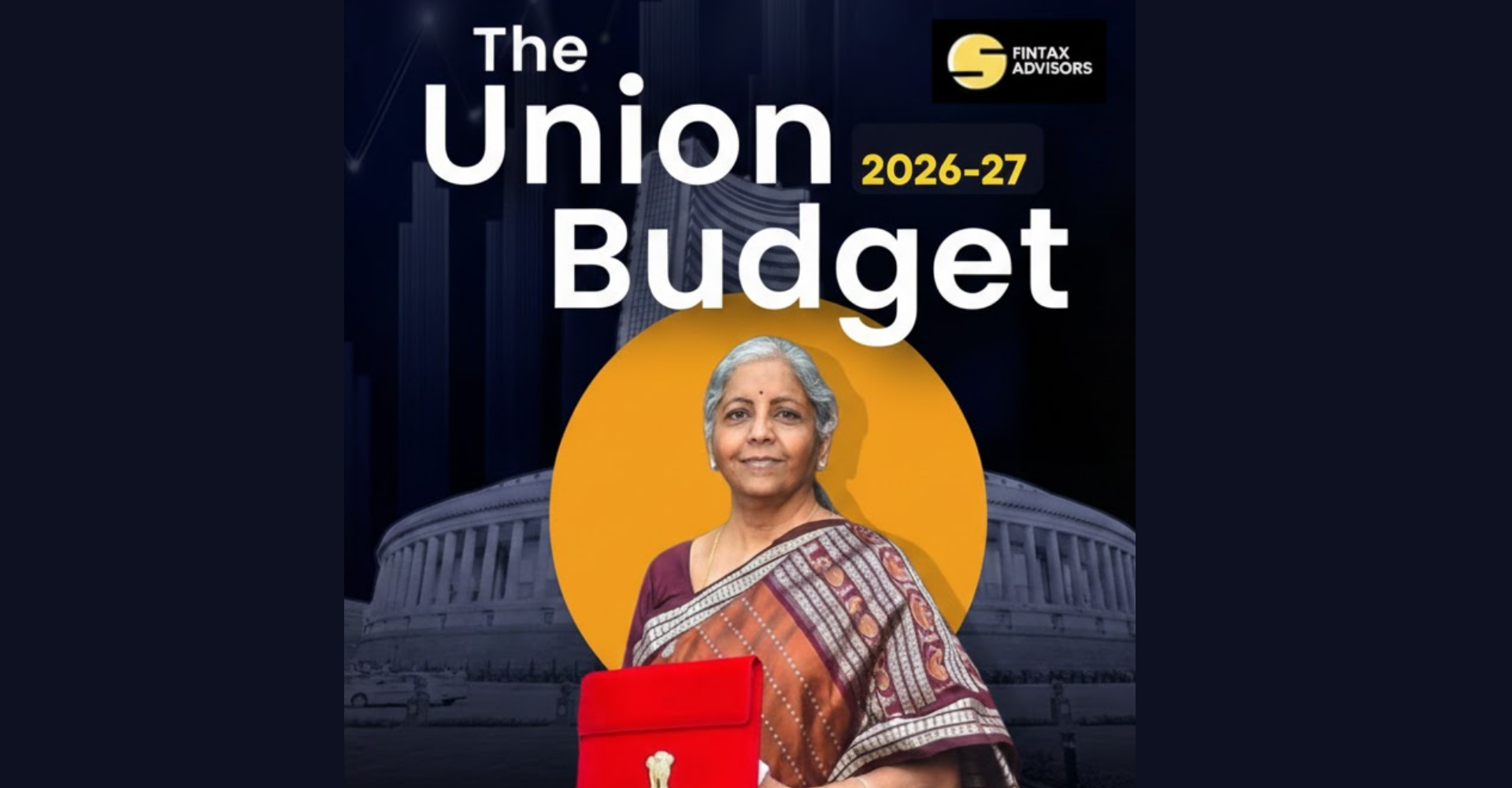
The Union Budget 2026, presented by Finance Minister Smt. Nirmala Sitharaman on 1 February 2026, marks her ninth consecutive budget and reflects a clear policy direction focused on stability, simplification, and trust-based governance. As a leading accounting firm in Delhi, SSFintax Advisor closely analyzes such policy developments to help individuals and businesses remain compliant and tax-efficient. While the government has refrained from making changes to income tax slabs, the budget introduces several structural reforms across direct tax administration, customs, GST, and compliance frameworks that will significantly impact taxpayers, businesses, and investors.
This blog provides a comprehensive overview of the major announcements and their implications for individuals, small taxpayers, and enterprises.
Income Tax Slabs Remain Unchanged in Budget 2026
One of the most anticipated aspects of Union Budget 2026 was the revision of income tax slabs. However, the Finance Minister chose to keep both the old and new tax regime slabs unchanged.
The decision follows significant slab rationalisation in the previous Budget (2025–26), where changes under the new tax regime effectively exempted salaried individuals earning up to ₹12.75 lakh (after standard deduction) from income tax. By maintaining the current slab structure, the government has prioritised policy continuity and predictability, enabling taxpayers to plan their finances with greater certainty, particularly while availing professional income tax filing services to ensure accurate and timely compliance.
There was also no announcement regarding an increase in standard deduction or changes to long-term capital gains tax rates.
Targeted Relief for Small Taxpayers
Union Budget 2026 places strong emphasis on easing compliance for small taxpayers through automation and rule-based processes.
Automated Lower or Nil TDS Certificate
A major reform introduced is a rule-based automated system for issuing lower or nil TDS certificates. Taxpayers will no longer be required to submit applications or approach Assessing Officers, reducing manual intervention and compliance burden.
This measure is expected to significantly benefit freelancers, professionals, and small businesses with fluctuating incomes.
One-Time Foreign Asset Disclosure Scheme
To address genuine compliance lapses, the government announced a one-time six-month foreign asset disclosure scheme. This initiative is aimed at students, young professionals, relocated NRIs, and employees who may have inadvertently failed to disclose overseas income or assets.
Eligible taxpayers will be allowed to voluntarily disclose such assets within prescribed limits, providing relief from penal consequences and prosecution.
Reduction in TCS on Foreign Travel and Education
Budget 2026 brings notable relief to taxpayers incurring overseas expenses:
- TCS on overseas tour packages reduced from 5% to 2%
- TCS on remittances for education abroad reduced from 5% to 2%
These changes will ease cash-flow pressures for families sending children abroad for education and individuals undertaking foreign travel.
Futures and Options Trading Becomes Costlier
In a move aimed at curbing excessive speculation in capital markets, the government has increased the Securities Transaction Tax (STT):
- STT on Futures increased from 0.02% to 0.05%
- STT on Options raised to 0.15% on premium and exercise
The Finance Minister described this as a “reasonable course correction,” citing concerns over high retail participation and losses in the F&O segment. While the announcement triggered short-term market reactions, it is expected to contribute to long-term market stability.
Revised Income Tax Return Filing Timelines
To streamline tax compliance and reduce last-minute filing pressure, the government has introduced staggered ITR filing deadlines:
- Individuals (ITR-1 and ITR-2): 31 July
- Non-audit business cases and trusts: 31 August
This reform is expected to improve filing accuracy and reduce administrative bottlenecks.
New Simplified Income Tax Act Effective from April 2026
The Finance Minister confirmed that the new simplified Income Tax Act will come into force from 1 April 2026. Key objectives of the new law include:
- Simplified and concise legal language
- Redesigned and user-friendly tax forms
- Reduced ambiguity and litigation
- Improved voluntary compliance
The government aims to make tax laws more accessible to ordinary citizens, reducing dependence on complex interpretations.
Customs Reforms to Enhance Ease of Doing Business
Union Budget 2026 introduces wide-ranging customs reforms to improve efficiency in cross-border trade.
Single Digital Window for Cargo Clearance
A unified digital platform will integrate approvals from multiple regulatory authorities, significantly reducing cargo dwell time and transaction costs.
Customs Integrated System and AI-Based Scanning
Over the next two years, the government plans to roll out:
- A Customs Integrated System (CIS)
- AI-enabled non-intrusive scanning at major ports
These initiatives will strengthen risk-based assessments, enhance transparency, and reduce manual intervention.
Extension of Advance Ruling Validity
The validity of customs advance rulings has been extended from three years to five years, providing greater certainty and consistency for businesses and reducing disputes.
GST Amendments Bring Relief to Industry
A long-standing area of litigation relating to post-sale discounts under GST has been addressed through a proposed amendment to Section 15(3)(b). The amendment aligns GST valuation provisions with commercial practices and is expected to reduce legacy disputes, particularly in the FMCG sector.
Businesses seeking GST registration in Delhi NCR and ongoing GST compliance support are expected to benefit from improved clarity and reduced litigation under the revised framework.
Sector-Specific and Social Welfare Measures
Union Budget 2026 also includes several relief measures with significant social impact:
- Customs duty exemption on 17 cancer drugs
- Reduction of customs duty on imported drugs for personal use from 20% to 10%
- Duty-free treatment for rare disease medicines
- Relaxation of baggage rules with settlement-based compliance
- Duty-free treatment for fish caught by Indian vessels in international waters
These initiatives aim to improve healthcare affordability and protect honest taxpayers.
Conclusion: A Budget Focused on Stability and Simplification
Union Budget 2026 may not offer dramatic tax slab changes, but it delivers meaningful reforms through simplification, automation, and targeted relief. By strengthening compliance frameworks, modernizing customs operations, and protecting small taxpayers, the budget reinforces trust-based governance and long-term economic stability.
Taxpayers and businesses are advised to review their tax planning and compliance strategies in light of these changes to fully benefit from the reforms introduced in Budget 2026, with guidance from experienced professionals such as SSFintax Advisor.