
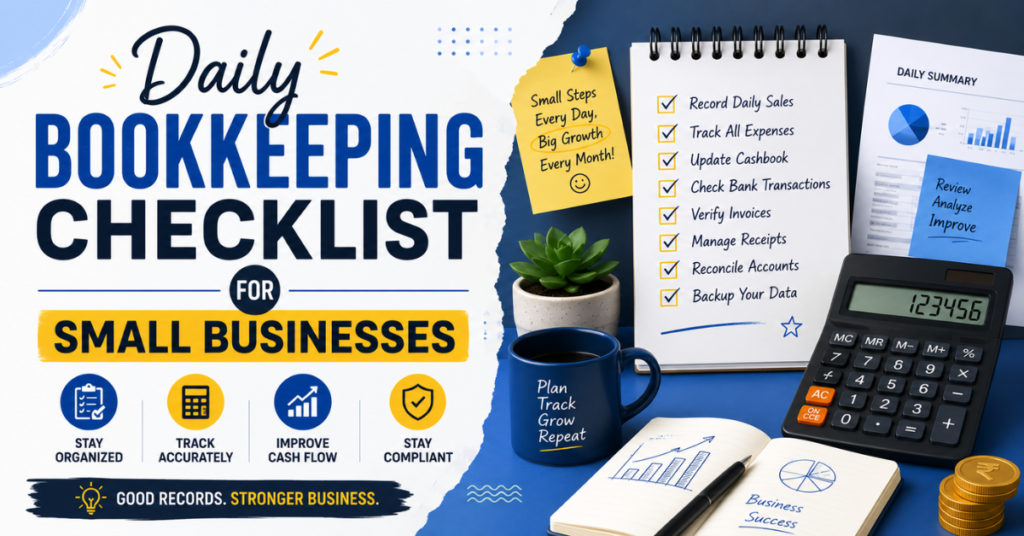
When it comes to small business finances, consistency and attention to detail are key. The most effective means of keeping your fiscal health in check is through sticking to a daily bookkeeping regimen. Running a business successfully depends on maintaining a good bookkeeping system, which includes monitoring income, keeping an eye on expenses, keeping accurate books, and making informed financial decisions. If a business does not have an efficient bookkeeping process, they can run into cash flow problems, tax difficulties, and reporting errors.
Visit Here for Outsourced Bookkeeping and Accounting Services
Financial management can be much easier with a daily bookkeeping checklist that helps to make sure that the day’s work is completed on time. Regardless of whether you are doing bookkeeping yourself or working with professional accounting and bookkeeping services, getting accurate records made daily should save time and money from costly mistakes.
1. Keep all day-to-day transactions recorded.
The initial task in bookkeeping is to record all the financial transactions. Any sale, payment, purchase, and expenses should be recorded in your accounting system. By having the right way to record transactions accurately, your financial records will be updated and reliable.
2. Monitor Business Income
Go through any incoming payments for the day. Ensure customer payments, sales receipts, and online transactions are verified to ensure all revenue is captured. Daily tracking of income helps the business owner know what cash flow looks like and can detect any discrepancies in a timely manner.
3. Track Business Expenses
If you record the expenses every day, you will not miss any important transactions. Retain records of invoices, receipts, and payment confirmations as a reference. Accurate financial reporting and easy tax preparation are also advantages of keeping track of expenses properly.
4. Match Cash and Bank Transactions
Check and reconcile cash receipts and deposits with the books of business. By reconciling on a daily basis, you can catch any missing items, any double entries, or any errors before they become significant accounting problems.
5. Review Outstanding Invoices
Keep track of unpaid customer bills and follow up as needed. A regular review process can help enhance collections and facilitate good cash flow for business operations.
6. Organize Financial Documents
Organize and file financial documents, such as invoices, receipts, bills, contracts, etc. Document management can be more efficient, and important records less lost, with digital storage systems.
7. Monitor Accounts Payable
Check the vendors’ payments and outstanding bills. It is important for businesses to be aware of their payment deadlines to ensure they do not incur late fees and keep their suppliers happy.
8. Review Cash Flow Position:
The management of cash flow is crucial for the success of any business. Checking daily cash balances can help business owners make sound spending decisions and plan for the future.
9. Backup Financial Data
Make regular copies of your financial records to keep them safe. Another benefit of cloud-based accounting software is that it offers increased security and continuity of business if there are any technical problems.
10. Review Financial Reports
Daily financial reports, even for short periods, can give some insight into how the business is doing. The regular monitoring of key figures allows the identification of trends and assists in improved decision-making.
Bookkeeping is a key component of running a business. Bookkeeping plays an important role in the operation of a business.
Bookkeeping is one aspect of business that many business owners find difficult to manage due to daily operations. Outsourced bookkeeping services can be used to ensure that businesses have their books in order without having a dedicated bookkeeping team. These services not only speed up the process and cut down on mistakes but also enable business owners to concentrate on growth.
Monthly bookkeeping services also offer in-depth financial reviews, account reconciliation, expense tracking, and reporting. When daily bookkeeping is complemented by professional advice, it guarantees long-term stability and adherence to the financial requirements.
Conclusion
By following a daily bookkeeping checklist, small businesses can keep their financial records organized, manage their cash flow more effectively, and make better decisions. Accurate bookkeeping helps to minimize errors, ease tax documentation, and enhance general financial management.
Our Accounting and Bookkeeping Services, Outsourced Bookkeeping Services, and Monthly Bookkeeping Services at SSFintax Advisor can help keep businesses organized and financially compliant. We have the expertise needed to provide businesses with accurate bookkeeping solutions, which can help them achieve sustainable growth and long-term success.
Common questions and answers (FAQs)
1. What is the meaning of daily bookkeeping?
Bookkeeping work is performed on a daily basis, and it entails the recording and tracking of all financial transactions that take place within the company on a daily basis.
2. Why is daily bookkeeping important for small businesses?
It is beneficial in keeping track of the records, managing cash flow, and preventing accounting mistakes.
3. What are tips to keep in mind for a daily bookkeeping checklist?
Expenses tracking, document organization, payment tracking, bank account reconciliation, and invoice tracking.
4. How often should bookkeeping records be updated?
Ideally, bookkeeping files need to be kept up to date daily.
5. What are outsourced bookkeeping services?
Outsourced bookkeeping services are the outsourcing of the bookkeeping work to a professional organization that provides this service.
6. Monthly Bookkeeping Services… What is it?
Monthly bookkeeping services involve business transaction reviews, financial reporting, and account reconciliation monthly.
7. Is bookkeeping a way to help with cash flow?
Yes, correct bookkeeping can make it easier for businesses to keep track of their finances, income, expenses, and payment responsibilities.
8. What records do businesses need to maintain for bookkeeping?
Keep records of invoices, receipts, bank statements, bills, contracts, and payment records.
9. Why are accounting and bookkeeping services important?
They assist businesses in keeping track of their finances, adhering to regulations, and making informed choices.
10. How can SSFintax Advisor help with bookkeeping?
SSFintax Advisor offers a range of accounting and bookkeeping services, outsourced bookkeeping services, and monthly bookkeeping services for businesses.