
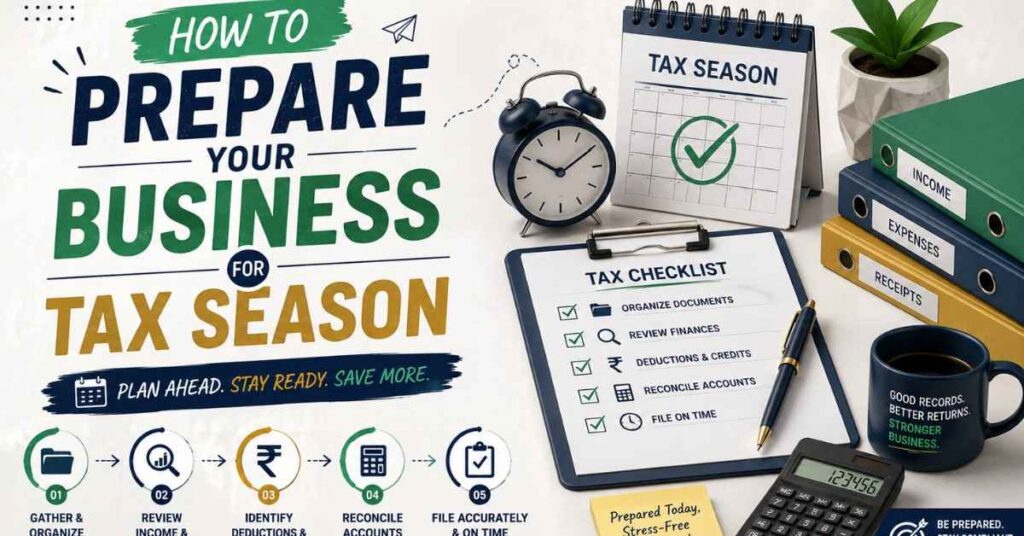
Tax season can be stressful for business owners, especially when financial records are incomplete or important documents are missing. Good preparation throughout the year can make tax filing more accurate, efficient, and manageable. Whether you run a small business, startup, or established company, organized accounting records are essential for meeting your tax responsibilities.
Here are practical steps to help prepare your business for tax season.
Visit Here: GST and Income Tax Consultation
1. Organize Your Financial Records
Start by gathering your income and expense records for the relevant financial year. Keep sales invoices, purchase bills, bank statements, payment records, expense receipts, and other supporting documents properly organized.
Your bookkeeping should clearly reflect your business transactions. Accurate records help you and your tax professional identify income, expenses, assets, liabilities, and other relevant financial information.
2. Reconcile Your Bank Accounts
Compare your accounting records with your bank statements and identify any differences. Bank reconciliation can help detect missing transactions, duplicate entries, incorrect amounts, or unexplained payments.
Completing this process before tax preparation gives you a cleaner and more reliable set of financial records.
3. Review Your Income and Business Expenses
Make sure all business income has been properly recorded. At the same time, review your expenses and ensure that legitimate business expenses are supported by appropriate documentation.
Do not claim an expense simply because it appears beneficial for reducing taxable income. Expenses should meet the applicable tax requirements and be properly supported by records.
4. Check TDS, GST, and Other Compliance Records
Depending on your business structure and activities, you may have obligations relating to TDS, GST, advance tax, and other regulatory requirements. Review your relevant filings, payments, and records before preparing your income tax return.
The Income Tax Department also provides information through the Annual Information Statement (AIS), which can help taxpayers review information reported to the department.
5. Determine Whether a Tax Audit Applies
Some businesses and professionals may be required to have their accounts audited under applicable tax provisions. For FY 2025–26, the Income Tax Department states that tax-audit requirements and thresholds continue to apply under the relevant provisions, with specific conditions for businesses and professionals.
If a tax audit applies to your business, the required audit report must be completed within the applicable deadline. For FY 2025–26 (AY 2026–27), the Income Tax Department specifies the applicable audit forms and a 30 September 2026 tax-audit-report due date.
6. Review Your Books Before Filing
Before submitting your return, review your profit and loss account, balance sheet, ledgers, tax records, and supporting documents. Correcting errors before filing is generally much easier than dealing with discrepancies later.
A qualified professional can also review your records and identify areas that require clarification or additional documentation.
7. Work With a Professional Tax Consultant
Tax rules can be complex, particularly for businesses with multiple sources of income, GST obligations, employees, investments, or audit requirements. Working with an experienced professional can help you understand your compliance responsibilities and prepare your records properly.
SSFintax Advisor, a CA firm in Delhi, can assist businesses with accounting, tax compliance, bookkeeping, and related professional requirements.
Conclusion
Preparing for tax season should not be a last-minute activity. Maintaining accurate books, organizing documents, reconciling accounts, reviewing tax information, and checking applicable compliance requirements can make the process smoother.
If you are looking for a reliable tax consultant in Delhi, professional guidance from SSFintax Advisor can help your business approach tax preparation with better organization and confidence.
{Tax requirements can vary according to the taxpayer, business structure, transactions, and applicable tax year. Always verify the current rules and deadlines with the income tax department or a qualified chartered ccountant.}