
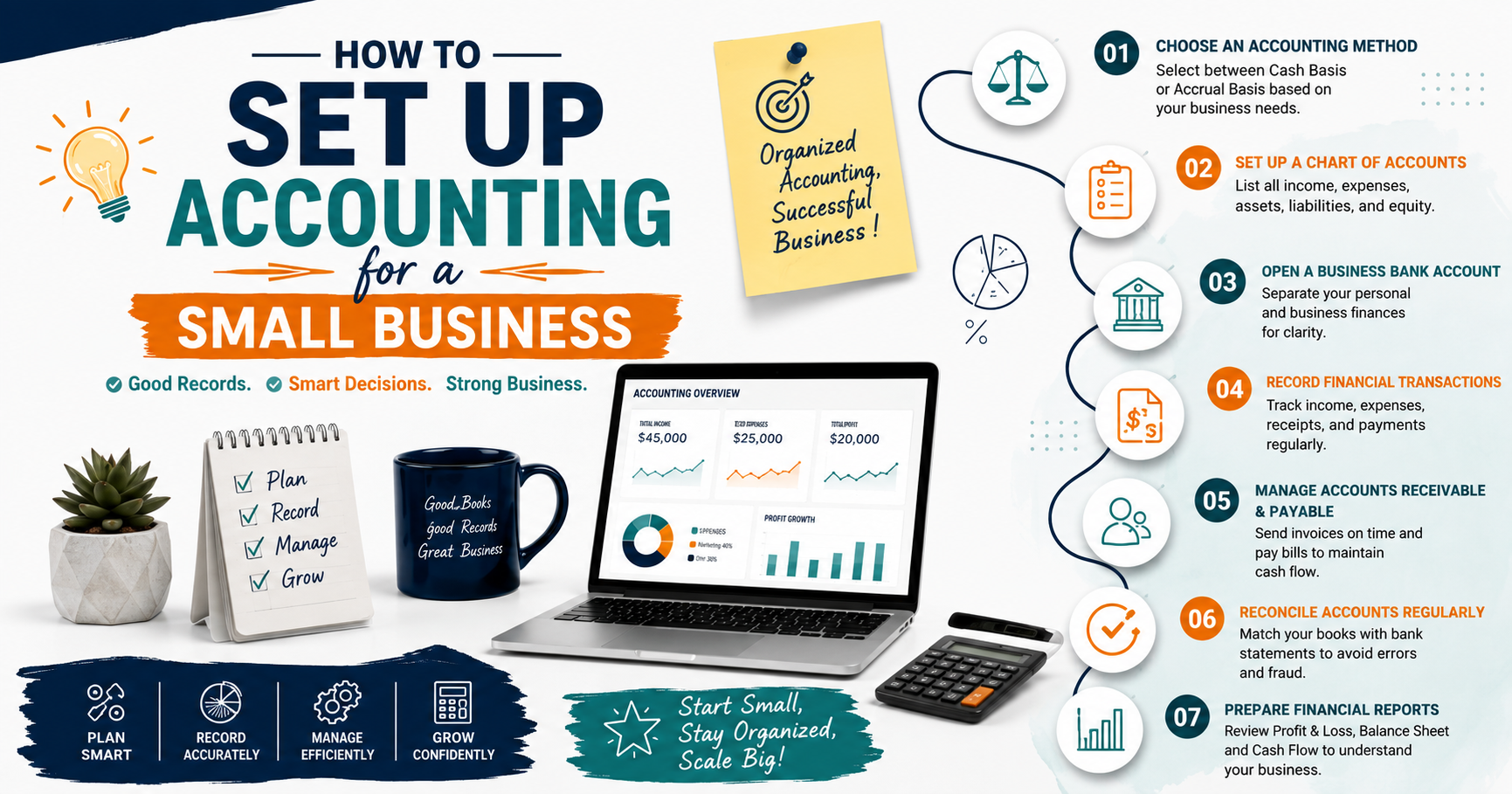
While starting up a small business can be said to be exciting, managing the finances correctly will be crucial to one’s success if the venture is to be pursued in the long run. Using an organized bookkeeping system allows business owners to have insight into their income, manage expenses, control cash flow, keep track of their taxes, and make informed decisions to achieve their desired business goals. With a simple accounting setup procedure, you can make setting up your accounting system painless.
Having a professional CA (SSFintax Advisor) will also allow Delhi-based businesses to keep their financial records in good order and streamline their operations.
Visit Here: Monthly Accounting and Bookkeeping Services
1. Differentiate Between Business and Personal Finances
The first thing you’ll need to do when starting up accounting is to divide your business money from your personal money. Keep your business account, keep it up to date, and use it just for business activities.
This allows for easier
- Keeping up digital records of all your company’s income and expenses
- Reconciling bank transactions
- Preparing financial statements
- Keeping up-to-date and correct tax records
- Grasping your real business finances
Combining personal and business expenses can cause unnecessary confusion and complicate accounting matters, as well as tax compliance.
2. Choose the Accounting Method
For the most part, small companies also adopt either cash-basis accounting or accrual-basis accounting.
With cash-basis accounting, transactions are recorded when money is actually received or paid. Accrual accounting involves recognizing revenue based on the earning process, as well as recording the costs at the time they are incurred.
The approach you need will vary based on the organization, size, and finances of your business, as well as the requirements you have. You can have an accountant give you advice on which is the better option.
3. Choose Reliable Accounting Software
It can make the financial management on a day-to-day basis easier if accounting software is used. The objective of a good system is to be able to record sales, expenses, invoices, payments, and other transactions efficiently.
When deciding on a software program to use, keep these things in mind:
- Type of transaction or volume of transactions
- Reporting requirements
- Ease of use
- Connecting with financial institutions
- Integration with banking systems
- Tax and compliance needs
- Data security and back-up capabilities
The aim is not just to employ software; it is to establish an accounting system that is accurate and maintainable.
4. Implement a Money System
All businesses should have a uniform way to track expenses. File financial invoices, receipts, bills, bank statements, and other documents in an orderly fashion.
Properly classified expenses would enable you to have a clear understanding of where your money is being spent and will simplify the financial reporting process. Digital records will also decrease the danger of losing valuable paperwork.
5. Reconcile Accounts Regularly
Bank reconciliation is the process of comparing how things are working in your books with your bank statements. It assists in detecting any duplicate transactions as well as any transactions with amounts that are incorrect or unauthorized.
Businesses reconciling their accounts on a regular basis is ideal rather than at the end of the financial year. It can be helpful for business owners to have a more accurate understanding of their available cash with regular reconciliation.
6. Monitor Financial Statements
Accounting isn’t just a matter of making entries. It is important to review some key financial statements, and this should be done on a regular basis:
- Profit & Loss Statement
- Balance Sheet
- Cash Flow Statement
- Accounts Receivable and Payable Reports
These reports offer insights into profitability, liabilities, assets, outstanding payments, and the overall financial situation.
7. Consider Professional Accounting Support
When a business expands, bookkeeping, accounting, tax documentation, payroll, and compliance can get to be a time-consuming task. Business owners can focus on their business operations and growth while providing their business with accurate records by having their business conducted by professional accounting and bookkeeping services.
When companies require continuous assistance but don’t want to keep a big accounting and bookkeeping staff, they can also begin weighing bookkeeping and accounting services.
Outsourced accounting and bookkeeping services can offer companies access to experienced professionals and streamlined financial processes, which can help them cut down on administrative expenses. Small businesses and startups can benefit most from trusting and hiring accounting and bookkeeping services that are outsourced.
Reasons to Use the Services of SSFintax Advisor
SSFintax Advisor is a CA firm located in Delhi that can help businesses maintain their accounts, bookkeeping, tax needs, and financial records. Business owners should take advantage of experts’ help to set up an accounting system and make sure they do not commit any mistakes while keeping track of their finances.
Final Thoughts
Corporate accounting setup is all crucial and important; if done properly, it creates a great financial base for the business. Keep finances separate, decide on a suitable accountancy system, keep files organized, reconcile accounts frequently, and audit the financial reports on a regular basis.
As you expand your business, keeping your books may further become difficult to manage efficiently. Then, professional assistance can help you out in such a situation. Small businesses can better support their finances and more easily make sound business decisions with these two elements: the right accounting system and the help of professionals like SSFintax Advisor.